How I Boosted My Balance in Just Days – Real Talk on Staying Steady
Balance isn’t just for athletes—it’s essential for everyday life. I used to wobble getting off the couch, and that scared me. Turns out, poor balance can sneak up with age, inactivity, or even long sits at a desk. The good news? Small, smart moves can make a real difference fast. This isn’t about extreme workouts or magic fixes. It’s about practical body care anyone can try. Let’s dive into how improving your balance can change how you move, feel, and live—starting now.
The Hidden Struggle: Why Balance Matters More Than You Think
Balancing well is something most people take for granted—until it starts slipping away. For many women in their 30s to 50s, subtle changes in stability begin to show during routine moments: reaching for a high shelf, stepping off a curb, or even standing up from a chair. These small stumbles aren’t just inconvenient; they can be early signs of declining balance. What makes this issue so insidious is how quietly it develops. Unlike pain or fatigue, poor balance doesn’t always announce itself with clear symptoms. Instead, it shows up as hesitation, slight wobbling, or an unconscious habit of holding onto furniture when moving around the house.
The reality is that balance plays a critical role in maintaining independence and confidence as we age. Studies show that balance-related concerns are among the top reasons adults seek physical therapy, even before a fall occurs. This isn’t about dramatic accidents—it’s about the everyday risks of tripping on a rug, losing footing on wet tiles, or misjudging a step on the stairs. These moments may seem minor, but over time, they chip away at mobility and self-assurance. When balance weakens, people often begin to limit their activities without realizing it—avoiding walks on uneven paths, saying no to family hikes, or skipping social outings that involve standing or moving through crowded spaces.
What many don’t realize is that balance decline isn’t an inevitable part of aging. While natural changes in muscle strength and joint flexibility do occur, research consistently shows that functional balance can be improved at any stage of life. The key is awareness and consistent practice. Women who engage in even light balance exercises report greater stability, fewer near-falls, and increased confidence in daily movement. The body adapts remarkably well when given the right kind of stimulation. And the best part? You don’t need special equipment or hours of training. Just a few mindful minutes each day can begin to reverse the trend and restore a sense of control over your body.
What Actually Controls Your Balance? A Simple Breakdown
Balancing on two feet might seem simple, but it’s actually the result of a complex, behind-the-scenes network working in perfect harmony. Your ability to stand steady relies on three major systems: your inner ear, your eyes, and your body’s sense of position—known as proprioception. These systems constantly communicate with your brain, sending real-time updates about where you are in space and how your body is moving. When all three are functioning well, balance feels automatic. But when one falls out of sync, the whole system can become unsteady.
The inner ear, specifically the vestibular system, acts like your body’s internal gyroscope. Tiny fluid-filled canals detect head motion and help your brain understand whether you’re moving forward, turning, or tilting. This is why spinning too fast makes you dizzy—the fluid continues moving even after you stop. Vision plays an equally important role. Your eyes provide visual cues about your surroundings, helping you orient yourself in space. Try standing on one foot with your eyes open, then close them—you’ll likely feel much less stable. That’s because you’ve removed one of your main sources of balance information.
Then there’s proprioception—the often-overlooked sense that tells your brain where your limbs are without having to look. It’s what allows you to touch your nose with your eyes closed or walk up stairs without watching each step. Proprioceptors are sensory receptors located in your muscles, tendons, and joints, and they send constant feedback about muscle tension and joint position. When these signals are strong and accurate, your body makes micro-adjustments without you even noticing. But if you’ve been sedentary for years, wearing flat shoes, or avoiding varied movement, these signals can weaken over time, making balance feel less reliable.
Understanding how these systems work together helps explain why balance can be affected by seemingly unrelated factors. For example, poor lighting at home, certain medications, or even dehydration can temporarily disrupt one of these systems and increase the risk of instability. The good news is that all three systems can be strengthened with targeted practice. Simple exercises that challenge your vision, shift your weight, or engage your foot muscles can help retrain your body’s balance network. Over time, this leads to better coordination, sharper awareness, and greater confidence in movement.
Why Modern Life Is Sabotaging Your Stability
Ironically, the very comforts of modern living are undermining our natural ability to stay steady. Most adults today spend the majority of their day sitting—whether at a desk, in a car, or on the couch. This sedentary lifestyle does more than contribute to weight gain or back pain; it directly impacts balance by reducing the variety of movements our bodies experience. When muscles aren’t regularly engaged in shifting, standing, or stabilizing, they lose their responsiveness. The core, glutes, calves, and feet—key players in balance—become underused and weak, making it harder to recover when we stumble.
Another major factor is footwear. Many women spend years in shoes with soft soles, high heels, or minimal arch support. While comfortable in the short term, these shoes reduce the amount of sensory feedback your feet receive from the ground. Your feet are packed with nerve endings that help your brain understand terrain, pressure, and movement. When they’re constantly cushioned or elevated, those signals become dulled. Over time, this leads to decreased foot strength and poor balance awareness. Walking barefoot on varied surfaces—like grass, sand, or textured tiles—can help reawaken these sensors, but most daily environments don’t encourage that kind of movement.
Then there’s the digital world. Hours spent looking down at phones or hunched over screens shift your center of gravity forward and weaken postural muscles. This forward head posture not only strains the neck and shoulders but also disrupts your body’s alignment, making it harder to maintain balance. Even simple actions like turning your head while walking become less coordinated when your spine is out of alignment. Add to that the fact that many home environments are designed for safety and convenience—smooth floors, handrails, non-slip mats—and the body gets fewer natural opportunities to practice balance. Without small, everyday challenges, your balance system doesn’t get the stimulation it needs to stay sharp.
The result is a body that’s adapted to stillness, not movement. But the human body was built to move—to navigate uneven ground, shift weight, and respond to changes in terrain. When we remove those challenges, we lose the subtle skills that keep us steady. The good news is that you don’t have to overhaul your life to regain stability. Small, intentional changes—like standing more, walking mindfully, or going barefoot at home—can begin to reverse the effects of modern living and restore your body’s natural balance capacity.
Quick Wins: 3 Simple Moves You Can Do Today
Improving balance doesn’t require a gym membership, special equipment, or hours of training. In fact, just three simple exercises—done for five to ten minutes a day—can make a noticeable difference in stability within days. These beginner-friendly movements are designed to gently challenge your balance system while building strength and awareness. The key is consistency, not intensity. Doing them daily, even in small doses, helps your body relearn how to stay steady.
The first exercise is the heel-to-toe walk. This mimics the motion of walking on a tightrope and is excellent for improving coordination and foot placement. Find a clear, straight path—about 10 to 15 feet long—and stand tall with your arms at your sides. Place the heel of one foot directly in front of the toes of the other, walking forward in a straight line as if on a narrow beam. Take slow, controlled steps, focusing on keeping your balance. If needed, use a wall or countertop for light support. Aim for 20 steps, or about two passes down your hallway. This movement strengthens the small muscles in your feet and ankles while training your brain to coordinate precise foot placement.
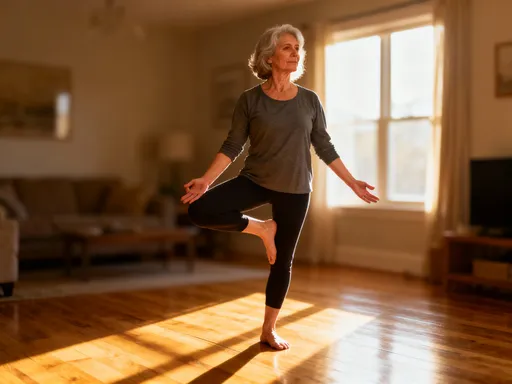
The second exercise is the single-leg stand. Stand near a sturdy surface like a kitchen counter or the back of a chair. Lift one foot slightly off the ground, balancing on the other leg. Keep your standing knee slightly bent and your core gently engaged. Hold for 20 to 30 seconds, then switch sides. As you improve, try closing your eyes for a few seconds to challenge your vestibular system. This exercise directly strengthens the ankle stabilizers and improves proprioception. If you wobble at first, that’s normal—your body is relearning how to maintain balance. Over time, you’ll notice less shaking and more control.
The third exercise is the weight shift. Stand with your feet hip-width apart and slowly shift your weight onto your right foot, lifting your left foot slightly off the ground. Then shift to the left, lifting the right. Continue this gentle side-to-side motion for 1 to 2 minutes. You can also shift forward and backward, rocking from heels to toes. This movement enhances your ability to control your center of gravity and improves joint awareness. It’s especially helpful for building confidence when stepping off curbs or moving on uneven surfaces. All three exercises can be done at home, during commercial breaks, or while waiting for the kettle to boil—making them easy to integrate into a busy day.
Turning Stability Into a Habit: Easy Daily Integrations
One of the biggest challenges in improving balance isn’t knowing what to do—it’s remembering to do it. The most effective way to build lasting change is to attach new habits to existing routines, a technique known as habit stacking. Instead of carving out extra time, you simply add balance practice to things you’re already doing. This makes the process feel natural, sustainable, and almost effortless.
For example, while brushing your teeth, try standing on one leg for 30 seconds, then switch to the other. This small challenge engages your balance system while you complete a daily task. If you’re waiting for the coffee to brew or the microwave to ding, use that time to do a few heel-to-toe steps across the kitchen or practice shifting your weight from side to side. Watching TV? During commercials, stand up and do 10 slow calf raises—lifting your heels off the ground and lowering them with control. These micro-moments add up and keep your balance system active throughout the day.
Another effective strategy is to go barefoot at home when it’s safe. Walking on different floor surfaces—wood, tile, carpet—provides varied sensory input to your feet, which helps sharpen proprioception. You can also place a small towel under your feet while sitting and practice scrunching it with your toes. This strengthens the intrinsic foot muscles that play a key role in stability. If you enjoy gardening, pay attention to how your body feels when standing on uneven ground or reaching for plants. These real-world movements naturally challenge your balance in a functional way.
The goal isn’t perfection—it’s consistency. Even two or three minutes of mindful movement each day can lead to noticeable improvements in stability within a week or two. Over time, these small actions build neural pathways that make balance feel more automatic. And because they’re woven into daily life, they’re much more likely to stick. The beauty of this approach is that it doesn’t feel like a chore. It feels like taking care of yourself in a quiet, practical way—one that pays off in greater confidence and ease of movement.
When to Seek Help: Knowing the Red Flags
While most balance issues can be improved with regular practice, some symptoms should not be ignored. If you’re experiencing frequent dizziness, unexplained lightheadedness, or a spinning sensation—especially when standing up quickly—it’s important to consult a healthcare provider. These could be signs of inner ear disorders, low blood pressure, or medication side effects. Similarly, if you’ve had more than one fall in the past year, even without injury, it’s a signal that your balance system may need professional evaluation.
Other red flags include difficulty walking in a straight line, sudden loss of coordination, or feeling unsteady even when sitting still. If you find yourself relying heavily on handrails, walls, or furniture to move around, that’s another sign that your balance may be compromised beyond what simple exercises can correct. Neurological conditions, inner ear problems, or muscle weakness related to chronic health issues may require targeted treatment.
A physical therapist can perform a full balance assessment and create a personalized plan to address specific weaknesses. They may incorporate tools like balance boards, foam pads, or visual tracking exercises to retrain your system more effectively. In some cases, vision or hearing evaluations may also be recommended, since both play crucial roles in balance. The goal is not to create dependence on professionals, but to ensure that your efforts to improve stability are safe, effective, and properly guided.
It’s also important to review any medications with your doctor, as some—including certain blood pressure drugs, sedatives, or antihistamines—can affect balance as a side effect. Never stop taking prescribed medication without medical advice, but do bring up any concerns about dizziness or instability. Addressing these issues early can prevent more serious problems down the road. Remember, seeking help is not a sign of weakness—it’s an act of self-respect and proactive care.
Beyond Standing Still: How Better Balance Changes Your Life
Improving your balance does more than help you stand on one leg—it transforms how you move through the world. Women who commit to regular balance practice often report feeling lighter on their feet, more confident in their bodies, and less fearful of everyday movements. Simple tasks like climbing stairs, carrying groceries, or playing with grandchildren become easier and more enjoyable. There’s a quiet pride that comes from knowing you can move with steadiness and control, no matter your age.
Better balance also supports long-term independence. As we age, the ability to recover from a stumble or adjust to an uneven surface becomes increasingly important. Those who maintain strong balance skills are less likely to experience falls, which are a leading cause of injury in midlife and beyond. But beyond safety, there’s a deeper benefit: the freedom to stay active. Whether it’s walking through a park, traveling to new places, or dancing at a family celebration, good balance allows you to participate fully in life without hesitation.
On a mental level, balance training fosters mindfulness. The focus required to stand steadily encourages you to be present in your body, tuning into posture, breath, and movement. This mind-body connection can reduce stress and improve overall well-being. Many women find that as their physical balance improves, they also feel more emotionally grounded and resilient. There’s a symbolic truth in the practice: just as you learn to steady yourself on two feet, you build the inner strength to navigate life’s uncertainties with greater calm.
Ultimately, balance is not just a physical skill—it’s a form of self-care. It’s a daily promise to honor your body, support its needs, and prepare it for the years ahead. You don’t need to be an athlete or fitness expert to benefit. You just need to start, consistently and kindly, with small steps. And when you do, you’ll discover that staying steady isn’t about perfection—it’s about progress, presence, and the quiet power of showing up for yourself, one balanced moment at a time.