Lost in the Magic of Udaipur—And Nearly Lost My Mind
Udaipur, India, is like a dream painted in white marble and mirrored lakes. But behind its postcard beauty lies a cultural labyrinth that can trip up even the most prepared traveler. I went expecting serenity, but found myself tangled in misunderstandings, overpriced promises, and unexpected social blunders. This isn’t just a travel story—it’s a real talk about what no guidebook warns you: the hidden cultural pitfalls beneath the magic. Beneath the shimmering lakes and palatial silhouettes, Udaipur demands more than admiration. It asks for awareness, respect, and a willingness to step beyond the surface. For travelers, especially those accustomed to Western norms, the city’s charm can be both enchanting and disorienting. What unfolds is not a tale of failure, but of learning—of how one misstep after another led to deeper understanding, humility, and ultimately, a richer journey.
First Impressions: The Fairy-Tale Facade of Udaipur
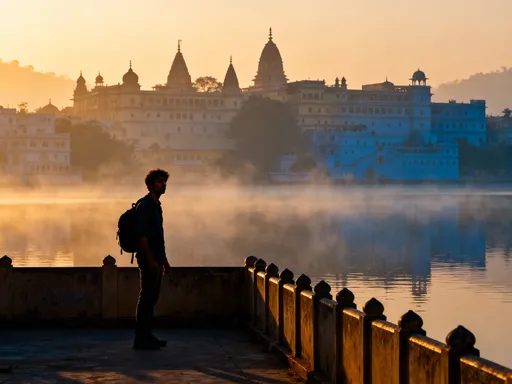
From the moment the taxi rounds the final bend and Lake Pichola comes into view, Udaipur feels unreal. The water glimmers under the morning sun, reflecting the white domes and arched windows of the City Palace. Boats glide silently across the surface, their wooden frames casting rippling shadows. In the distance, the island palace of Jag Mandir rises like a mirage, untouched by time. It’s no wonder the city is often called the 'Venice of the East'—a label that captures its romantic appeal but barely scratches its complexity.
This visual splendor shapes the expectations of nearly every visitor. Travelers arrive with cameras ready, hearts full of wanderlust, and minds already composing postcards. The beauty is immediate, overwhelming, and deeply persuasive. It suggests a city that is not only picturesque but also welcoming, orderly, and easy to navigate. But this first impression, while genuine in its aesthetics, can be dangerously misleading. The elegance of Udaipur’s architecture does not always extend to its social interactions, market practices, or cultural expectations.
Many tourists assume that because the city looks serene, it will feel serene. They expect politeness to mean agreement, smiles to indicate approval, and silence to signal consent. But in Rajasthan, as in much of India, indirect communication is a cultural norm. A soft 'maybe' often means 'no,' and a polite nod may simply be a gesture of courtesy, not commitment. I learned this when I asked a rickshaw driver if he could take me to a remote temple before sunset. He smiled and said 'yes,' yet never moved. Only later did I realize he lacked the vehicle for the journey but couldn’t bring himself to say no outright.
The fairy-tale facade also distracts from the realities of urban life. Udaipur is not a museum—it is a living, breathing city with traffic, waste, noise, and economic pressures. The narrow lanes of the old city, while charming, can be crowded and confusing. Street vendors call out persistently, children beg near temples, and unmarked alleys lead nowhere. These are not flaws to be criticized, but aspects of daily life that visitors must learn to navigate with empathy. The danger lies in romanticizing the city so much that one fails to see it clearly—its rhythms, its challenges, its humanity.
Appreciating Udaipur begins with recognizing that beauty and comfort are not the same. The city’s visual harmony does not guarantee a smooth experience. Instead, it invites travelers to look deeper, to move beyond the postcard, and to engage with the culture on its own terms. When we allow ourselves to be surprised—not just by the stunning views, but by the complexities beneath—we open the door to a more authentic journey.
Dressing the Part: When Fashion Meets Tradition
Clothing is one of the most visible ways travelers express themselves, but in Udaipur, it also becomes one of the most immediate ways they communicate respect—or the lack of it. Rajasthan is a region steeped in tradition, where attire carries deep cultural and religious meaning. While the city is relatively cosmopolitan and accustomed to tourists, certain expectations remain firm, especially in religious and community spaces.
My first real misstep came on a warm afternoon when I joined a local festival near Gangaur Ghat. The streets were alive with music, children in bright costumes, and women balancing brass pots on their heads. Drawn by the energy, I walked in wearing shorts and a sleeveless top—perfect for the heat, but entirely inappropriate for the occasion. The music didn’t stop, but the atmosphere shifted. Smiles faded. Children stopped dancing to stare. An older woman gently gestured toward my legs, then pointed toward her own covered ankles. I left quickly, embarrassed and unaware I had committed a cultural offense.
In Rajasthani society, modesty in dress is not just a religious rule—it is a sign of dignity and respect. Women, in particular, are expected to cover their shoulders and knees in public, especially near temples or during festivals. Men are also expected to dress conservatively in sacred spaces, though the standards are slightly more flexible. The colors and fabrics of traditional clothing—like the flowing ghagras and odhnis worn by local women—are not merely decorative; they reflect identity, region, and occasion.
For visitors, adapting doesn’t mean abandoning personal style. It means making small, thoughtful adjustments. Wearing a lightweight scarf to cover the shoulders, choosing long skirts or loose pants, or slipping on a tunic over a tank top can make a significant difference. These choices are not about conforming to outdated rules, but about showing awareness and humility. When tourists dress respectfully, they are often met with warmer responses—shopkeepers engage more openly, families invite conversations, and priests welcome temple visits with genuine smiles.
The lesson I learned was simple: clothing is a language. In Udaipur, dressing with care is not about sacrifice—it’s about participation. It signals that you are not just passing through, but attempting to understand. And in a culture that values hospitality and honor, that small gesture can open doors that no map or guidebook can show.
The Photography Trap: Capturing Culture or Crossing Lines?
In the age of social media, photography has become a central part of travel. Snap a moment, share it, and preserve the memory. But in Udaipur, as in many traditional communities, the act of taking a photo is not always neutral. It can be seen as intrusive, disrespectful, or even exploitative—especially when done without permission.
I discovered this while walking through the narrow alleys of the old city, where potters shape clay on hand-turned wheels just as their ancestors did centuries ago. One craftsman, his hands covered in wet earth, was fully absorbed in his work. I raised my phone and snapped a quick photo, thinking I was capturing artistry. He looked up, startled, and shook his head firmly. 'No, no!' he said, his voice sharp with disapproval. I apologized and stepped back, but the moment was broken. His concentration was lost, and so was my chance to connect.
Photography in Udaipur is not banned, but it comes with unspoken rules. Many artisans, shopkeepers, and families are happy to be photographed—if asked first. A simple gesture, a smile, or a quiet 'May I take a photo?' in broken Hindi can transform a tense interaction into a shared moment. In fact, some welcome it, especially if you show genuine interest in their craft. I later returned to the potter with a small gift of tea and asked politely. This time, he nodded, adjusted his posture, and even gestured for me to come closer. The resulting image was not just a picture—it was a collaboration.
The deeper issue is intent. Are you photographing to document, to appreciate, or to collect exotic images for online approval? In a place where dignity and privacy are deeply valued, the way you hold your camera matters as much as what you point it at. Children, in particular, should never be photographed without parental consent. Temples and religious ceremonies are also sensitive zones—many prohibit photography entirely, not out of secrecy, but out of reverence.
The camera, when used thoughtfully, can be a bridge. But when used carelessly, it becomes a barrier. In Udaipur, the most powerful images are often the ones you don’t take—the quiet moments of connection that happen when you lower the lens and simply be present.
Bargaining Blues: The Unspoken Rules of the Market
The markets of Udaipur—Hathi Pol, Bada Bazaar, and the lanes near Jagdish Temple—are a feast for the senses. Saffron, turmeric, and sandalwood fill the air. Bolts of silk and cotton drape from shopfronts. Handmade jewelry, painted miniatures, and embroidered textiles beckon from every corner. But beneath this vibrant surface lies a complex social dance: the art of bargaining.
For many Western travelers, haggling feels uncomfortable or even dishonest. In fixed-price economies, paying more than necessary seems like a personal failure. I entered the bazaars with this mindset, determined not to be 'ripped off.' My first attempt at bargaining ended poorly. I was shown a beautiful mirror-work blouse for 1,500 rupees. Thinking it was overpriced, I countered with 500. The shopkeeper’s face fell. He folded the garment slowly and said, 'This is handmade. My daughter stitched this.' I had not insulted the price—I had insulted his family’s labor.
In Rajasthan, bargaining is not a transaction; it is a relationship. It is expected, even welcomed, but it must be done with respect. The starting price is rarely the final price, but the process is meant to be conversational, not confrontational. A good haggle includes smiles, tea, and questions about the craft. It begins with curiosity: 'How long did this take to make?' or 'What is this fabric called?' These small gestures signal that you value the item—and the person who made it.
A fair offer is usually 60 to 70 percent of the initial price, depending on quality and materials. Walking away is acceptable, but it should be done politely. If the seller follows you, offering a lower price, it’s often best to return and complete the purchase—this is part of the ritual. Refusing repeatedly can be seen as disrespectful, especially if you’ve already handled the goods.
I eventually learned to slow down. I accepted cups of chai, asked about the dyes used in block printing, and complimented the craftsmanship. The prices I paid were fair, but the experience was richer. Bargaining, I realized, is not about winning—it’s about connecting. When done right, it leaves both parties feeling honored, not exploited.
Temple Etiquette: More Than Just Removing Shoes
Udaipur is home to some of Rajasthan’s most sacred temples, including the 17th-century Jagdish Temple and the ancient Eklingji Temple just outside the city. These are not tourist attractions—they are living places of worship, where daily rituals, prayers, and offerings shape the rhythm of life. Yet many visitors treat them like museums, stepping in with cameras, loud voices, and uncovered heads.
I made this mistake at Jagdish Temple. Excited to see the carved pillars and brass idols, I entered quickly, forgetting to cover my head. I spoke to my companion in a normal tone, unaware that silence is expected in inner chambers. A priest approached me gently, handed me a scarf, and whispered, 'Please speak softly. This is God’s home.' His words stayed with me. I had not broken a rule—I had broken a trust.
Temple etiquette in Udaipur goes far beyond removing shoes. Visitors must dress modestly, cover their heads (especially women), and avoid leather items, which are considered impure in Hindu tradition. Eating, drinking, and smoking are prohibited on temple grounds. Photography is often not allowed, particularly during rituals. The most important rule, however, is intent. Entering a temple should be an act of reverence, not curiosity. If you are there to learn or reflect, you will be welcomed. If you are there to gawk, you will be noticed—and remembered.
Some temples have specific entry rules. At Eklingji, non-Hindus are not permitted inside the main sanctum. This is not exclusion—it is preservation of sacred space. Respecting these boundaries is not about religion; it is about cultural sensitivity. Observing rituals from outside, listening to the chants, or simply sitting quietly in the courtyard can be just as powerful as entering the inner chamber.
Temples in Udaipur are not frozen in time. They are centers of community life, where families gather for festivals, priests chant ancient hymns, and bells ring at dawn and dusk. To visit them with awareness is to witness the soul of the city—not as a performance, but as a living tradition.
Food Faux Pas: From Street Eats to Seating Customs
Udaipur’s cuisine is a celebration of Rajasthan’s desert heritage—rich, spiced, and deeply flavorful. From the flaky pyaz kachori to the hearty dal baati churma, every dish tells a story of resourcefulness and tradition. Street food stalls, rooftop restaurants, and family-run dhabas offer endless opportunities to explore. But eating in Udaipur comes with invisible rules that many tourists overlook.
One of my earliest mistakes happened at a small roadside eatery. I was handed a plate of hot baati with a bowl of dal. Without thinking, I reached in with my left hand to break the bread. The server paused, then quietly placed a spoon beside me. I later learned that in Indian culture, the left hand is considered unclean, used for hygiene purposes. The right hand is reserved for eating, greeting, and giving. Using the left hand at the table, even accidentally, can be seen as disrespectful.
Another important consideration is dietary tradition. Beef is strictly avoided in Hindu communities, and many restaurants, especially in older neighborhoods, are entirely vegetarian. Ordering beef—even if available elsewhere—can cause discomfort. Similarly, alcohol is not served in most local eateries, particularly near temples. When dining with a host, it is polite to try every dish offered, even in small amounts. Refusing food can be interpreted as rejecting hospitality.
Seating customs also vary. In homes and some traditional restaurants, people eat while sitting on the floor. This is not a sign of informality—it is a cultural practice that promotes humility and connection. Removing shoes before entering a dining space is expected. In public restaurants, high chairs are common, but the principle remains: eating is a shared, sacred act, not a rushed transaction.
Street food is safe and delicious, but it’s wise to choose stalls with high turnover and clean practices. Bottled water is recommended, and ice should be avoided unless it’s made from purified water. The best meals often come from watching what locals order—and following their lead.
Closing the Loop: Traveling with Awareness, Not Assumptions
Leaving Udaipur, I carried more than souvenirs. I carried lessons—some learned gently, others through awkward silences and quiet corrections. The city had not been unkind; it had been honest. It had shown me that travel is not just about seeing new places, but about seeing oneself more clearly. My assumptions, my haste, my blind spots—they were all reflected back in the eyes of the people I met.
True travel is not measured in photos taken or sights checked off a list. It is measured in moments of connection—when a shopkeeper shares a story, a priest offers a blessing, or a child smiles after you’ve taken the time to say hello in their language. These moments do not happen because you are a tourist. They happen because you have made the effort to respect, to listen, to adapt.
Udaipur teaches humility. It reminds us that no guidebook holds all the answers, and no app can translate cultural nuance. The magic of the city is real—but it is not passive. It must be earned through awareness, patience, and openness. When we approach travel not as consumption, but as conversation, we stop being visitors and begin to belong, even if just for a moment.
So go to Udaipur. Wander its lakeside paths, admire its palaces, savor its food. But do more than admire. Learn. Ask. Pause before you photograph, cover your shoulders before you enter, and speak softly in sacred spaces. Let the city change you. Because the greatest souvenirs are not things you can pack—they are the ways you grow. Travel with care, and you won’t just see the magic. You’ll become part of it.