Taste of Tradition: Why Jeonju’s Food Culture Will Blow Your Mind
Walking through Jeonju’s narrow alleys, I was hit by the rich scent of fermenting soy sauce and sizzling pancakes. This city isn’t just about sights—it’s a full sensory journey centered around food. From humble street stalls to generations-old kitchens, every bite tells a story. The air carries whispers of tradition, from the slow fermentation of soybeans to the rhythmic pounding of rice cakes. I never expected Korean cuisine to have such depth, and Jeonju, often overlooked, proved to be its beating heart. Here, food is not merely sustenance—it is history, identity, and connection served on a plate.
Discovering Jeonju: More Than Just a Hanok Village
Jeonju is best known for its well-preserved Hanok Village, where over 800 traditional Korean houses line curved streets under tiled rooftops. These homes, built with wooden frames, paper windows, and clay walls, offer a glimpse into pre-modern Korean life. Visitors often come to take photos in the picturesque lanes or rent hanbok for a cultural experience. While the village itself is visually striking, the true essence of Jeonju lies beyond the postcard views—in the kitchens, markets, and alleyways where food defines daily rhythm.
Unlike larger cities like Seoul or Busan, where global chains and modern dining dominate, Jeonju has preserved its culinary identity with quiet determination. The city’s compact size makes it ideal for exploration on foot, allowing travelers to move seamlessly from historic sites to food stalls without losing the thread of local life. Streets that appear quiet during the day come alive at dusk with the sizzle of griddles and the laughter of families gathering around shared meals. This integration of culture and cuisine is not accidental—it is deeply intentional, rooted in generations of agricultural practice and communal values.
The layout of Jeonju supports this food-centered lifestyle. Traditional markets are centrally located, within walking distance of residential areas and tourist sites. Local ingredients move quickly from farm to table, ensuring freshness and seasonal authenticity. Even in newer neighborhoods, restaurants emphasize traditional preparation methods, using stone pots, earthenware jars, and wood-fired stoves. The city does not treat food as a tourist attraction but as a living heritage—something to be practiced, not just observed. This authenticity is what sets Jeonju apart, transforming an ordinary trip into a meaningful immersion.
Bibimbap’s Birthplace: How a Simple Dish Defines a City
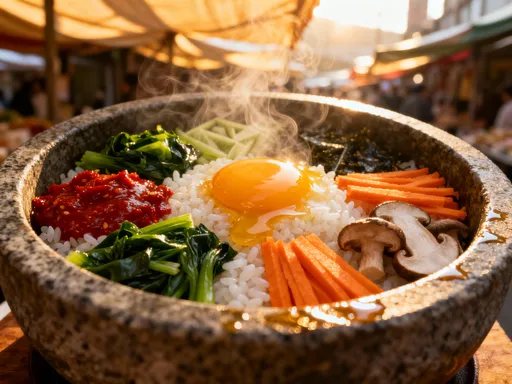
Ask any local where to find the best bibimbap, and the answer comes quickly: Jeonju. Widely recognized as the birthplace of Korea’s most iconic dish, this city treats bibimbap not as a menu item but as a symbol of pride and craftsmanship. While variations exist across the country, Jeonju-style bibimbap stands out for its balance of premium ingredients, vibrant presentation, and deep umami flavor. The dish typically begins with hand-threshed rice, cooked to a slightly chewy consistency, then topped with more than ten types of seasoned vegetables, raw beef, a sunny-side-up egg, and a generous spoonful of aged gochujang.
What makes Jeonju’s version unique is not just the ingredients but the philosophy behind them. Farmers in the surrounding North Jeolla Province grow organic vegetables using traditional methods, rotating crops to preserve soil health. The gochujang, often made in-house by restaurants or sourced from local jang makers, has a complex flavor profile—sweet, spicy, and deeply fermented. Some versions even include abalone or snow crab for special occasions, elevating the dish into celebratory territory. Breakfast bibimbap, a local custom, reflects how deeply embedded the dish is in daily life—many families start their day with a hot bowl, believing it provides balanced energy and grounding.
Visitors can sample bibimbap in settings ranging from family-run eateries with plastic stools to refined restaurants set in restored hanok houses. At one popular spot near Gyeonggijeon Shrine, a fourth-generation owner prepares the dish using her grandmother’s recipe, adjusting seasonings based on the weather and ingredient availability. This attention to detail illustrates how Jeonju views food as both art and science—a practice refined over time, not standardized for mass consumption. To eat bibimbap here is to participate in a culinary lineage that values patience, seasonality, and care.
The Markets: Where Flavor Comes Alive
If Jeonju’s soul is found in its food, then its heartbeat pulses strongest in the traditional markets. Nambu Market and Gyo-dong Food Street are not merely places to shop—they are living ecosystems where culture, economy, and gastronomy intersect. Open from early morning until late evening, these markets draw locals and visitors alike, offering everything from fresh produce to handmade condiments. The energy is constant: vendors call out prices, cooks stir large pots of stew, and customers squeeze between stalls carrying reusable cloth bags filled with kimchi and noodles.
Nambu Market, established over a century ago, spans several blocks and includes both covered halls and open-air sections. One aisle specializes in banchan—small side dishes like seasoned spinach, radish kimchi, and braised tofu—each made fresh daily. Another section focuses on grains and legumes, where sacks of black sesame, red beans, and glutinous rice sit in neat rows. The aroma of drying seaweed mingles with the tang of fermenting soybeans, creating a sensory map of the region’s agricultural wealth. Many stalls have operated for generations, with children now running the counters their grandparents once managed.
These markets are not performative for tourists; they serve as essential supply points for Jeonju’s restaurants and households. Chefs arrive before dawn to select herbs, mushrooms, and fish, knowing that quality ingredients are the foundation of great cooking. Grandmothers haggle over the price of napa cabbage, planning their next batch of kimchi. The interaction between buyer and seller is often warm and familiar, reflecting a community where trust and reputation matter. For travelers, walking through these markets offers an unfiltered look at how food moves from field to table, shaped by seasonal cycles and human relationships.
Street Food Crawl: A Feast on Every Corner
No visit to Jeonju is complete without indulging in its legendary street food. While bibimbap may be the city’s crown jewel, the real magic often happens on the sidewalks, where small stalls serve up bold flavors in handheld portions. The most famous of these is hotteok—a sweet pancake filled with a molten mixture of brown sugar, cinnamon, and crushed nuts. When cooked to perfection, the crust is crisp and golden, giving way to a sticky, fragrant center that spills out with the first bite. Vendors typically serve them fresh off the griddle, wrapped in paper to catch the drips.
But hotteok is just the beginning. Bindaetteok, or mung bean pancakes, are another staple, made by grinding soaked mung beans into a coarse batter, then frying them with shredded kimchi, pork, and green onions. The result is a savory, slightly crunchy pancake best eaten with a dip of soy-vinegar sauce. Equally popular is tteokbokki, though Jeonju’s version differs from the bright red, heavily spiced kind found in convenience stores. Here, the rice cakes are simmered in a rich broth made with house-fermented gochujang, giving the dish a deeper, more balanced heat. Some vendors add fish cakes, boiled eggs, or even dumplings to create heartier versions.
Timing is crucial when exploring Jeonju’s street food scene. Certain stalls open only in the early morning, catering to workers and market vendors. Others appear at dusk, transforming quiet corners into bustling food hubs. Gyo-dong Street, especially on weekends, becomes a pedestrian-only zone lined with dozens of vendors, each specializing in one or two items. Locals follow an unspoken code: order small portions from multiple stalls, share with companions, and eat while walking. This grazing style allows for maximum variety without overeating. For visitors, following this rhythm—slowing down, tasting mindfully, engaging with vendors—turns a simple snack into a cultural experience.
Fermentation Culture: The Secret Behind the Taste
Beneath Jeonju’s vibrant food scene lies a quiet, slow-moving force: fermentation. This ancient practice, passed down through generations, is responsible for the deep, complex flavors that define the city’s cuisine. Soy sauce, doenjang (fermented soybean paste), and gochujang (chili paste) are not store-bought condiments here—they are homemade treasures, crafted with care and patience. In backyards across the city, rows of onggi—unglazed earthenware jars—sit under wooden shelters, each containing months-old batches of fermenting ingredients.
The jangdokdae, or fermentation yard, is a common feature in traditional homes. These jars are arranged according to strict principles: soy sauce on the east side to catch morning sun, gochujang in the center for balanced temperature, and kimchi buried in the ground during winter to maintain cool, stable conditions. The process is both scientific and intuitive. Temperature, humidity, and even wind direction influence the development of flavor. Families monitor their ferments daily, adjusting covers, stirring contents, and tasting for progress. A single batch of soy sauce can take up to a year to mature, requiring constant attention and respect for natural rhythms.
To witness this process firsthand, I visited a small family-run jang workshop on the outskirts of the city. The owner, a woman in her sixties, explained how she follows her mother’s method: soaking soybeans, boiling them, shaping them into meju blocks, and hanging them in a warm attic for several weeks until mold develops. Once dried, the blocks are crushed and mixed with salt and water, then placed in jars to ferment. She emphasized that no two batches are identical—each reflects the conditions of its time. This philosophy of imperfection and adaptation is central to Jeonju’s food culture. Fermentation is not about control but harmony—with nature, with time, and with tradition.
Dining Like a Local: Etiquette, Rhythm, and Connection
In Jeonju, a meal is never rushed. Whether in a busy restaurant or a quiet home, dining unfolds in layers, beginning with a spread of banchan and ending with shared tea. The table is rarely set for one; even solo diners are often offered extra side dishes, as if to say, “You are not alone.” This communal spirit defines the city’s approach to food—not as fuel, but as a medium for connection. Servers refill water glasses without being asked, elders are served first, and empty dishes are quietly replaced. These gestures are not formalities but expressions of hospitality deeply woven into social life.
There are unspoken rules that guide the rhythm of a meal. Dishes are shared, not ordered individually. Chopsticks and spoons are never left standing upright in a bowl—a practice associated with funerals. When drinking alcohol, it is polite to turn your head slightly away when sipping from a glass offered by an elder. Pouring drinks for others before yourself is a sign of respect. Finishing everything on your plate shows appreciation for the effort behind the meal. These customs are not enforced rigidly, but their presence creates a sense of order and warmth, making even casual meals feel meaningful.
The pace of eating mirrors the city’s overall tempo—steady, deliberate, and attentive. A typical dinner might last over an hour, with pauses for conversation, refills of soup, and the gradual introduction of new dishes. Even in modern restaurants, tables are spaced closely, encouraging interaction between strangers. At a bibimbap house near Jeondong Cathedral, I watched a group of elderly women laugh over their meal, one of them teaching a tourist how to properly mix the ingredients. “Start from the bottom,” she said, demonstrating with her spoon. “Everything should come together.” In that moment, the dish became more than food—it was a lesson in balance, unity, and care.
Planning Your Food Journey: Practical Tips for a Meaningful Trip
To truly appreciate Jeonju’s food culture, planning matters. The best time to visit is during spring (April to early June) or autumn (September to October), when temperatures are mild and local ingredients are at their peak. Summer can be hot and humid, while winter, though quieter, may limit access to outdoor markets and some street vendors. Avoid national holidays like Chuseok or Seollal if possible, as popular restaurants book up months in advance and accommodations become scarce.
A stay of two to three days allows enough time to explore without rushing. Begin with a morning walk through Nambu Market, sampling fresh banchan and observing the flow of daily life. Afterward, visit Gyeonggijeon Shrine, a Confucian temple that once housed portraits of Joseon kings, then enjoy lunch at a nearby bibimbap restaurant. In the late afternoon, take a self-guided hanok tour, pausing at a traditional tea house for barley or persimmon leaf tea. Evenings are best spent on Gyo-dong Street, where street food stalls come alive and the atmosphere turns festive.
Getting to Jeonju is convenient via KTX high-speed rail. Travelers from Seoul can reach Iksan Station in about two hours, then transfer to a local bus or taxi for the 20-minute ride to Jeonju. Direct buses are also available from major cities. Once in the city, walking and bicycle rentals are the best ways to navigate—many areas are pedestrian-friendly, and signage is clear in English. For accommodations, consider staying in a hanok guesthouse, where you can sleep on traditional ondol floors and wake up to homemade breakfasts featuring fermented side dishes and rice porridge.
The goal of a trip to Jeonju should not be to check off a list of must-eat dishes, but to absorb the rhythm of a place where food is lived, not just consumed. Allow time for unplanned moments: a conversation with a vendor, a quiet cup of tea in a courtyard, the smell of soy sauce drifting through an alley at dusk. These small experiences, woven together, create a deeper understanding of what makes Jeonju special—not just as a food destination, but as a model of intentional living.
A City That Feeds the Soul
Jeonju does not rely on spectacle to impress. There are no towering skyscrapers, no neon billboards, no flashy attractions. Its power lies in the quiet moments—the steam rising from a stone pot of bibimbap, the crackle of a hotteok as it hits the griddle, the careful arrangement of banchan on a lacquered tray. This is a city that measures richness not in wealth or speed, but in depth of flavor, strength of tradition, and warmth of human connection.
In a world increasingly dominated by fast food and instant gratification, Jeonju stands as a reminder of another way to eat—and to live. Here, food is not separated from culture, from family, or from the land. It is a daily practice of mindfulness, a celebration of seasonality, and a gesture of care. Every dish carries the weight of history and the hope of continuity. To taste Jeonju’s cuisine is to taste resilience, patience, and pride.
More than a destination, Jeonju is an invitation—to slow down, to savor, to listen. It asks us to pay attention not just to what we eat, but how and why. In doing so, it offers something rare: a meal that nourishes not only the body but the soul. In protecting its food culture, Jeonju protects a way of life worth preserving—one bite at a time.