Lost in the Mirage: Bukhara’s Natural Beauty Isn’t What You Think
You know what? I went to Bukhara expecting golden deserts and wild oases, but the truth hit me like a sandstorm. Sure, the city’s ancient streets are breathtaking, but if you're chasing lush landscapes or dramatic nature trails, you might leave disappointed. This isn’t a nature escape—it’s a cultural masterpiece. I’ll tell you why chasing “natural scenery” here can be a misleading trap, and how to actually enjoy Bukhara without falling into the same illusion I did.
The Allure of Bukhara: A City Steeped in History, Not Wilderness
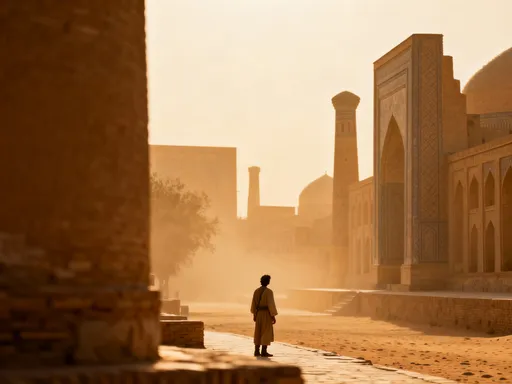
Bukhara is not a destination defined by its rivers, forests, or sweeping mountain vistas. Instead, its soul lies in centuries of human craftsmanship, spiritual devotion, and architectural brilliance. Nestled in the heart of Uzbekistan, this ancient Silk Road city stands as one of the most significant Islamic centers in Central Asia. Its historic center, recognized by UNESCO as a World Heritage Site, is a meticulously preserved labyrinth of domed mosques, grand madrassahs, and bustling bazaars that have stood for over a thousand years. Walking through Lyab-i Hauz, with its reflective pool surrounded by centuries-old mulberry trees and teahouses, one feels transported not into a natural paradise, but into a living chapter of history.
The city’s true beauty emerges not from untouched wilderness but from the intricate tilework of the Kalyan Minaret, the symmetrical elegance of the Ulugh Beg Madrassah, and the quiet dignity of the Ismail Samani Mausoleum—structures that have survived invasions, empires, and time itself. These are not relics frozen in the past; they are part of a living urban fabric where prayer still echoes from mosque minarets and artisans craft traditional ceramics and textiles in workshops passed down through generations. The greenery here—such as the shaded courtyards of religious schools or the modest public parks—is intentionally placed, a complement to human life rather than a dominant natural force.
It’s important to understand that Bukhara was never meant to be a retreat into nature. It was built as a center of learning, trade, and faith. Its location in the Kyzylkum Desert region meant water was scarce and had to be carefully managed through ancient irrigation systems like the aryks. Every tree, every patch of grass, is the result of deliberate cultivation, not spontaneous growth. This human mastery over a harsh environment is itself a form of beauty—one that speaks to resilience, ingenuity, and cultural continuity. Travelers who come seeking unspoiled landscapes may overlook this deeper narrative, missing the profound significance of a city that has turned survival into artistry.
The Misconception: Why Travelers Expect Natural Wonders
So why do so many people arrive in Bukhara expecting vast deserts, blooming oases, or dramatic canyons? The answer lies in how Central Asia is often portrayed in travel media, photography, and even official tourism campaigns. The region as a whole is marketed for its raw, untamed landscapes—endless dunes, snow-capped peaks, and remote mountain lakes. When travelers see images of the Kyzylkum Desert or the turquoise waters of Aydarkul, they naturally assume these wonders are accessible from every major city in Uzbekistan. Bukhara, by virtue of its location within this broader region, gets bundled into that same romantic vision, even though it offers a very different experience.
Social media plays a significant role in shaping these expectations. A single photograph of a palm tree near a small pond in Bukhara can be captioned with words like “hidden oasis” or “desert sanctuary,” creating the illusion of a lush retreat. Filters enhance greenery, angles exaggerate scale, and context is often lost. Without proper framing, viewers may believe they are seeing a natural paradise when, in reality, they are looking at a carefully maintained urban garden. Influencers who visit multiple destinations in one trip often blend their content, making it difficult to distinguish between what was filmed in Bukhara and what was captured hundreds of kilometers away in a more nature-rich area.
Additionally, many first-time visitors to Central Asia lack a clear geographical understanding of Uzbekistan’s diverse terrain. They may not realize that the country stretches from arid desert zones to high mountain ranges and fertile valleys, each with distinct ecosystems. Bukhara sits in a relatively flat, dry region where natural vegetation is sparse. While it once benefited from the Zerafshan River’s flow, modern water management and climate conditions have limited large-scale greening. The misconception arises when travelers generalize the region’s natural diversity and assume Bukhara must offer the same scenic variety as, say, the Fergana Valley or the western shores of the Aral Sea. Recognizing this gap between perception and reality is the first step toward a more fulfilling travel experience.
What “Natural Scenery” Actually Exists in Bukhara
Let’s be clear: Bukhara does have green spaces, but they are best understood as urban respites rather than natural attractions. The most notable among them is the area surrounding Lake Karakul, a man-made reservoir located just outside the old city. While it offers a pleasant place for a walk, especially in the early morning or late afternoon, it is not a pristine lake surrounded by wilderness. The water is calm and reflective, often dotted with ducks and small boats, but the shoreline is lined with paved paths, benches, and cafes. Families gather here on weekends, children play on swings, and couples stroll under shaded walkways. It’s a peaceful spot, yes—but its charm lies in its role as a community space, not in any untamed beauty.
Another example is the modest park near the Tokai Tepa complex, where tall poplars and trimmed shrubs provide shade from the summer heat. These trees are irrigated regularly, a necessity in a city where annual rainfall averages less than 200 millimeters. The greenery here is intentional and maintained, a small defiance against the surrounding aridity. Similarly, the alleys leading out from the Ark Fortress occasionally open into quiet courtyards with fruit trees and climbing vines, but these are private or semi-private spaces, not expansive natural zones.
Even the famous Lyab-i Hauz complex, often mistaken for a natural feature, is entirely man-made. The pond was constructed in the 16th century to serve both practical and aesthetic purposes—providing water for locals while creating a serene focal point in the city. The plane trees that shade its perimeter were planted deliberately and are carefully pruned. While the atmosphere is undeniably tranquil, with the sound of rustling leaves and the scent of tea drifting from nearby chaikhanas, it is a cultivated serenity. There are no wildflowers, no native grasslands, and no natural waterfalls. What Bukhara offers is not nature in its raw form, but nature shaped by human hands to support daily life and spiritual reflection.
Photographs can be misleading. A wide-angle shot taken at golden hour might make a small garden appear like a secluded forest glade. A drone image could suggest a lake is surrounded by untouched desert when, in fact, residential neighborhoods are just out of frame. Travelers should approach such visuals with healthy skepticism. The green spaces in Bukhara are valuable and enjoyable, but they are not the primary reason to visit. They serve as breathing rooms between historical sites, not destinations in their own right.
The Real Pitfall: Chasing Nature Instead of Culture
When travelers arrive with their hearts set on natural beauty, they risk missing the very essence of Bukhara. The danger lies not in disappointment alone, but in the way that misplaced expectations can distort the entire experience. Visitors who spend their days searching for “hidden oases” or scenic viewpoints may rush through the Kalyan Mosque without pausing to admire its hand-carved wooden columns, or skip the Magoki Attori Mosque because it doesn’t have a garden view. They might hire a driver to take them to the outskirts in hopes of finding desert dunes, only to return frustrated by the flat, dusty landscape—unaware that just steps away, within the old city, lies one of the most important collections of Islamic architecture in the world.
This focus on nature can lead to a superficial engagement with the city. Instead of taking a guided tour to learn about the theological significance of the Mir-i Arab Madrassah, some opt for self-guided walks with only a map and a list of “Instagrammable” spots. They photograph the blue tiles of the Abdulaziz Khan Madrassah without knowing it was once a center of Sufi learning. They sip tea at Lyab-i Hauz without realizing the site was nearly destroyed during Soviet times and later restored as a symbol of cultural resilience. In chasing a fantasy of natural solitude, they overlook the deep human stories embedded in every stone and archway.
Moreover, this mindset can affect travel planning. Some visitors allocate only one day to Bukhara, assuming it’s a small desert town with limited offerings, while reserving multiple days for hiking or camping elsewhere. Yet scholars and historians often spend weeks studying the city’s architectural evolution. The Old Town alone contains over 140 protected monuments. To walk through Bukhara with genuine appreciation requires time, curiosity, and a willingness to shift focus from visual spectacle to cultural depth. The reward is not panoramic views, but a profound connection to a civilization that has shaped the spiritual and intellectual life of Central Asia for over a millennium.
Smart Destination Choices: Where to Go for Actual Natural Beauty in Uzbekistan
If your heart longs for sweeping landscapes, rolling dunes, or mountain fresh air, Uzbekistan does offer those experiences—just not in Bukhara. By adjusting your itinerary slightly, you can enjoy both the cultural riches of ancient cities and the natural wonders of the countryside. One of the most striking natural destinations is Aydarkul Lake, a vast saltwater lake formed in the 1960s after the diversion of the Amu Darya River. Located in the Kyzylkum Desert, it stretches over 400 square kilometers and is surrounded by desert sands and low hills. Birdwatchers, photographers, and nature lovers find it a rewarding destination, especially during migration seasons when flamingos and pelicans gather along the shores.
For those seeking mountain scenery, the Nurata Mountains in the west of the country provide a refreshing contrast to the desert plains. Part of the western Tian Shan range, these highlands feature rugged trails, alpine meadows, and small villages where traditional farming methods are still practiced. The area around Mount Khazret Sultan is particularly scenic, with panoramic views and seasonal wildflowers. The local community-based tourism initiatives allow visitors to stay in family homes, enjoy home-cooked meals, and hike through protected landscapes with trained guides.
Another excellent option is the Zerafshan Range, which runs parallel to the historical cities of Bukhara and Samarkand. While the mountains themselves are not easily accessible from Bukhara, organized tours from Samarkand can take travelers into the high valleys where glacial streams feed into natural springs. The Chatkal Biosphere Reserve, located in the far east of the country, is home to diverse flora and fauna, including rare species like the Tien Shan brown bear and the snow leopard, though sightings are extremely rare. For a more accessible nature experience, the Ugam-Chatkal National Park near Tashkent offers well-marked trails, forested slopes, and picnic areas, making it ideal for families and casual hikers.
The key is to plan with intention. Rather than trying to squeeze a desert safari into a two-day stopover in Bukhara, consider building a balanced itinerary that includes dedicated time for both cultural and natural exploration. Visit Bukhara for three full days to absorb its history, then travel to Nurata or Aydarkul for a two-day excursion. This approach ensures that neither aspect of Uzbekistan’s richness is compromised. It also supports sustainable tourism by spreading visitor impact across regions and allowing each destination to be appreciated on its own terms.
How to Experience Bukhara Right: A Balanced Approach
Experiencing Bukhara at its best means embracing it for what it truly is—a historical treasure, not a nature reserve. Start by setting realistic expectations. Come prepared for warm temperatures, especially in summer, and pack light clothing, a hat, and sunscreen. The city is best explored on foot, so comfortable walking shoes are essential. Plan your visit during the spring (April to June) or autumn (September to October) when the weather is mild and the light is ideal for photography.
Engage with local culture by hiring a certified guide. A knowledgeable guide can transform a simple walk through the old city into a journey through time, explaining the architectural details, historical context, and spiritual significance of each site. Many guides are fluent in English and passionate about sharing their heritage. Consider booking a tour that includes visits to working madrassahs, traditional craft workshops, and local markets where you can sample dried fruits, nuts, and warm flatbreads.
To add a touch of greenery to your trip without false expectations, take a short excursion to the village of Ramitan, located about 30 kilometers north of Bukhara. The route passes through agricultural fields and small orchards, offering glimpses of rural life. The village itself has a historic complex with a mausoleum and a small garden, and the surrounding area is dotted with qanats—ancient underground water channels that have supported farming for centuries. It’s not a wilderness escape, but it provides a peaceful contrast to the city’s bustle.
Another rewarding option is a visit to the Sitorai Mokhi-Khosa, the former summer residence of the Emir of Bukhara. Located on the outskirts, this palace complex features a mix of European and Central Asian architecture and is surrounded by landscaped gardens. While still urban, the space feels more open, with fountains, flowerbeds, and shaded pathways. It’s an excellent place to rest, reflect, and appreciate how even leisure spaces in Bukhara are infused with cultural meaning.
Finally, allow time for stillness. Sit in a chaikhana, order a glass of green tea, and simply watch the world go by. Listen to the call to prayer echo across the rooftops. Observe artisans weaving silk or hammering copper. These quiet moments often become the most memorable parts of a journey—not because they are dramatic, but because they are real.
Reframing the Journey: Why Bukhara’s Value Isn’t in Its Nature
Bukhara’s greatness does not lie in its ability to mimic a national park or tropical oasis. Its value is in its endurance, its artistry, and its role as a guardian of memory. This is a city that has witnessed empires rise and fall, that has preserved knowledge through centuries of change, and that continues to inspire awe not through natural spectacle, but through human achievement. To judge it by the standard of untouched landscapes is to misunderstand its purpose and diminish its legacy.
The real journey begins when we let go of fantasy and embrace truth. Mindful travel means choosing destinations not because of how they appear in a filtered photo, but because of what they genuinely offer. It means respecting a place for its authentic character, whether that is desert simplicity, mountain grandeur, or urban heritage. Bukhara invites us to slow down, to look closely, and to listen—to see beauty not only in what is green and wild, but in what is old, wise, and enduring.
So if you go to Bukhara, go for the silence between the prayers, for the geometry of its domes, for the warmth of shared tea. Go to stand beneath the Kalyan Minaret and feel the weight of history. Go to understand that some of the world’s most profound experiences are not found in untouched nature, but in the lasting marks of human spirit. Let Bukhara be what it is—a timeless city, a cultural sanctuary, a masterpiece of civilization. And when you crave the desert winds or mountain air, go to the places that truly offer them. Travel with intention, and every journey will be richer for it.