You Won’t Believe What These Walls Have Seen – Rabat’s Hidden Architectural Soul
Rabat isn’t just Morocco’s capital—it’s a living museum where every arch, tile, and alley tells a story. I walked through ancient gates and stood beneath silent minarets, feeling history breathe around me. From Almohad ruins to French colonial facades, the city blends cultures in stone and plaster. What makes Rabat’s architecture so special? It’s not just beauty—it’s continuity. Centuries collide here, not with chaos, but with quiet harmony. This is culture carved in walls, waiting to be read.
The Gateway to Time: Chellah’s Whispering Ruins
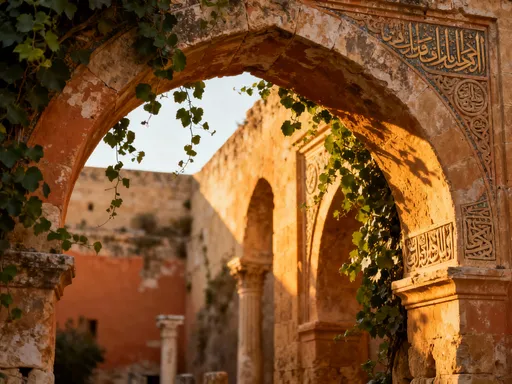
Nestled just south of Rabat’s bustling city center, the walled complex of Chellah stands as a rare testament to Morocco’s layered past—a place where Roman ambition, Islamic reverence, and natural serenity converge. Once the site of the Roman settlement Sala Colonia, dating back to the 1st century CE, Chellah was later transformed in the 13th century by the Marinid dynasty into a sacred necropolis and spiritual retreat. Walking through its arched entrance, visitors are greeted by the quiet rustle of palm fronds, the distant call of storks nesting atop crumbling towers, and the ghostly outlines of ancient columns draped in ivy. These remnants are not merely ruins—they are fragments of a continuous dialogue between civilizations.
Architecturally, Chellah reveals a fascinating fusion of styles. Roman engineers laid out symmetrical streets and constructed robust columns with Corinthian capitals, many of which still stand amid the overgrowth. When the Marinids repurposed the site, they overlaid Islamic design principles: horseshoe arches framed prayer halls, intricate stucco carvings adorned prayer niches, and geometric tilework—zellige—lined the floors of mausoleums. The minaret of the former mosque, though modest in height, echoes the elegance of Almohad engineering with its precise brickwork and octagonal base. What makes Chellah unique is not the grandeur of its scale, but the intimacy of its layers—each stone a sentence in a long, ongoing narrative.
This coexistence of cultures in one sacred space speaks volumes about Morocco’s historical tolerance and adaptability. Unlike cities where one era erases the last, Chellah preserves them side by side. The Romans built for order and empire; the Marinids built for prayer and eternity. Today, the site is protected as a national monument, and conservation efforts focus on stabilizing fragile structures while maintaining the site’s natural ambiance. Birdlife, particularly the storks that return each year to rebuild their massive nests atop the minaret, have become symbolic of Chellah’s enduring life. For visitors, the experience is as much about stillness as it is about sightseeing—benches dot the shaded paths, inviting quiet reflection amidst centuries of memory.
To fully appreciate Chellah, one should visit in the early morning or late afternoon when the sun casts long shadows across the mosaics and the temperature remains gentle. Comfortable walking shoes are essential, as the terrain is uneven and partially exposed. While guided tours are available, even a self-led walk with a good informational brochure can deepen understanding. Most importantly, Chellah asks for respect: this is both an archaeological site and a place of spiritual significance. By preserving such spaces, Morocco honors not only its past but also the idea that history need not be static—it can grow quietly, like vines over ancient stone.
Hassan Tower: The Minaret That Never Finished Speaking
Rising from a broad plaza beside the Bou Regreg River, the Hassan Tower is one of Rabat’s most iconic landmarks—an unfinished minaret that speaks more through silence than sound. Commissioned in 1195 by the Almohad caliph Yaqub al-Mansur, it was intended to be the tallest minaret in the Islamic world, part of a grand mosque that would symbolize the empire’s power and devotion. At 44 meters, the tower stands impressively tall, yet it is only a fraction of its planned height. Construction halted after the caliph’s death, leaving the structure frozen in time, its scaffolding holes still visible in the sandstone walls. Rather than diminishing its impact, this incompleteness adds emotional depth—a monument not to triumph, but to human aspiration.
Made from striking red sandstone quarried locally, the tower glows in the sunlight, its surface etched with intricate geometric patterns and Kufic inscriptions praising God and the caliph. The craftsmanship reflects the Almohad mastery of proportion and precision, with each level narrowing slightly as it ascends, creating a sense of elegant restraint. The base features a series of blind arches, while the upper sections include ornamental windows framed by carved plaster. These details were not merely decorative; they carried symbolic meaning, representing the connection between earthly architecture and divine order. Even without its planned dome or companion minaret, Hassan Tower commands awe—not for what it became, but for what it was meant to be.
The surrounding archaeological site reveals the footprint of the unfinished mosque, marked by rows of granite columns that once supported its vast roof. Today, these columns stand like sentinels in a field of grass, offering a haunting glimpse into the scale of the original vision. The Royal Mausoleum of Mohammed V, completed in the 20th century, now occupies a central place adjacent to the mosque ruins. This modern mausoleum, with its green-tiled roof and white marble façade, creates a powerful contrast: where the Almohads left a dream incomplete, modern Morocco built a monument to national unity and dignity. The tomb of King Mohammed V, along with his sons, is housed within, making this a site of both historical and patriotic significance.
For visitors, the best time to experience Hassan Tower is during the golden hours—shortly after sunrise or before sunset—when the warm light enhances the sandstone’s hue and casts long, dramatic shadows across the plaza. The site is easily accessible on foot from the city center and is well-maintained, with clear signage and shaded areas. Photography is encouraged, but visitors are asked to maintain a respectful demeanor, especially near the Royal Mausoleum, where silence and decorum are observed. The unfinished nature of the tower invites contemplation: it reminds us that legacy is not always about completion, but about the values we choose to honor across generations.
The Royal Embrace: Kasbah of the Udayas
Perched on a cliff overlooking the confluence of the Bou Regreg River and the Atlantic Ocean, the Kasbah of the Udayas is one of Rabat’s most picturesque neighborhoods—a fortress-turned-quarter that exudes charm, history, and quiet elegance. Originally constructed in the 12th century by the Almohads as a military stronghold, the kasbah was later inhabited by Andalusian refugees in the 17th century, who brought with them a refined aesthetic that transformed its character. Today, its narrow, winding alleys are painted in crisp blue and white, echoing the coastal towns of southern Spain, while fragrant bougainvillea spills over courtyard walls and small fountains trickle in shaded corners.
The architecture of the Udayas reflects a seamless blend of military function and domestic beauty. The main gate, Bab Oudaia, is a masterpiece of Almohad design—its horseshoe arch framed by carved stone, its passage dim and vaulted, designed to slow down potential attackers. Inside, the neighborhood unfolds like a labyrinth of intimate spaces: small houses with carved wooden doors, hidden courtyards with zellige-tiled fountains, and rooftop terraces that offer panoramic views of the river and the city of Salé across the water. Many of these homes feature Andalusian-style courtyards, where symmetry, water features, and lush greenery create a sense of tranquility—a deliberate contrast to the kasbah’s original purpose as a defensive outpost.
One of the most beloved spots within the kasbah is the Andalusian Garden, a meticulously restored space that pays homage to the horticultural traditions of Moorish Spain. Laid out in a formal grid, the garden features symmetrical pathways, citrus trees, jasmine bushes, and a central pool that reflects the surrounding arches. Benches invite visitors to sit and absorb the serenity, while the sound of birds and distant waves enhances the sense of escape. Nearby, traditional teahouses serve mint tea in ornate glassware, often accompanied by views of the ocean. These small cafes, though modest, have become cultural institutions in their own right, where locals and tourists alike gather to watch the light change over the water.
The Kasbah of the Udayas is more than a tourist destination—it is a living neighborhood, protected as a UNESCO World Heritage site and carefully preserved to maintain its historical integrity. Residents continue to live within its walls, and the Moroccan government has implemented strict regulations to prevent over-commercialization. Restoration projects focus on using traditional materials and techniques, ensuring that repairs remain authentic. For visitors, the experience is both visual and emotional: walking through the blue alleys feels like stepping into a postcard, yet the presence of everyday life—children playing, laundry drying on lines—grounds the beauty in reality. It is a rare example of heritage that is not frozen in time, but gently evolving.
French Elegance Meets Moroccan Craft: The Ville Nouvelle
Just beyond the ancient walls of the medina lies Rabat’s Ville Nouvelle, or New Town—a district that emerged during the French Protectorate period (1912–1956) as a model of colonial urban planning. Designed by French architect Henri Prost, this area contrasts sharply with the organic layout of the old city. Here, wide boulevards radiate from central squares, tree-lined avenues create shaded promenades, and public buildings reflect a blend of European architectural styles, including Art Deco, Neoclassical, and Beaux-Arts. Yet, unlike colonial districts in some other cities, Rabat’s Ville Nouvelle never fully erased local identity. Instead, it became a canvas where Moroccan craftsmanship subtly reclaimed space, blending European forms with North African soul.
One of the most striking features of the Ville Nouvelle is its façades—elegant stucco walls punctuated by wrought-iron balconies, shuttered windows, and, in many cases, discreet but unmistakable Moroccan touches. Look closely at a government building or former colonial residence, and you may spot zellige tile borders framing doorways, cedar wood carved into intricate mashrabiya screens, or horseshoe arches subtly integrated into window designs. These details were not always part of the original French plans; many were added or restored after independence, reflecting a national desire to reassert cultural identity within colonial structures. The result is a unique architectural dialogue: the order and symmetry of European planning, softened by the warmth and artistry of Moroccan tradition.
The Place Mohammed V, at the heart of the Ville Nouvelle, exemplifies this synthesis. Surrounded by ministries, banks, and cultural institutions, the square is laid out in a star pattern with radiating avenues, a hallmark of French urban design. Yet the buildings themselves—though grand and formal—incorporate green-tiled roofs, arched colonnades, and decorative tilework that root them in local aesthetics. The Cathedral of Saint Peter, though no longer used for regular worship, stands as a historical artifact of the colonial era, its rose window and Gothic spire now preserved as part of Rabat’s diverse architectural tapestry. Today, the space is used for public gatherings, markets, and cultural events, transforming what was once a symbol of foreign authority into a shared civic space.
Walking through the Ville Nouvelle, one senses a city that has thoughtfully absorbed its past rather than rejected it. Moroccans did not demolish the colonial infrastructure after independence; they adapted it. Schools, post offices, and administrative buildings continued to serve the public, while new layers of meaning were added through art, language, and daily use. The district remains a functional part of modern Rabat, home to professionals, students, and families. For visitors, it offers a different kind of beauty—one of order, light, and quiet dignity. Strolling down Avenue Mohammed V or pausing in a café near the Parliament gardens, one can appreciate how a city can evolve without losing its soul.
Modern Identity in Stone: Contemporary Government Buildings
In the latter half of the 20th century and into the 21st, Rabat has continued to grow as Morocco’s political and administrative heart, giving rise to a new generation of public architecture. Modern government complexes, ministry buildings, and institutional spaces reflect a deliberate effort to express national identity through design. Rather than adopting international glass-and-steel minimalism, many of these structures draw deeply from Morocco’s architectural heritage, reinterpreting traditional elements in contemporary forms. Horseshoe arches appear in reinforced concrete, cedar wood is used for interior paneling and ceiling beams, and zellige tilework accents lobbies and entryways—each choice a quiet affirmation of cultural continuity.
These buildings are not merely functional; they are symbolic. By incorporating motifs from centuries-old Islamic and Berber design, architects communicate a message of rootedness and pride. The use of local materials—such as tadelakt plaster, hand-carved stone, and sustainably sourced cedar—supports domestic craftsmanship and reduces environmental impact. Courtyards and shaded walkways, inspired by traditional riads, promote natural ventilation and light, blending aesthetic heritage with climate-responsive design. In this way, modern Moroccan architecture in Rabat does not imitate the past, but converses with it—acknowledging history while meeting the needs of a growing, modern state.
One can observe this philosophy in the layout of administrative zones, where open plazas and landscaped gardens create breathing space amid the formal structures. These areas are designed not only for officials but for citizens—inviting public access and fostering transparency. The architecture, while dignified, avoids ostentation. There is a sense of restraint, of purpose over spectacle, which aligns with broader cultural values of humility and service. Even in scale, these buildings often remain human-sized, avoiding the impersonal vastness sometimes seen in capital cities elsewhere.
For visitors, these spaces may not be as immediately dramatic as ancient ruins or colorful medinas, but they offer a deeper understanding of how a nation sees itself. They reflect a confidence that tradition and modernity are not opposites, but partners. By walking through these areas—whether visiting a cultural center or simply passing through a government square—one becomes aware of a quiet architectural revolution: one that values identity, sustainability, and dignity in equal measure.
Craft as Architecture: Zellige, Plaster, and Woodwork Up Close
To understand Rabat’s architecture is not only to admire its grand facades and historic sites, but to look closely—to see the hand of the artisan in every detail. The beauty of Moroccan design lies in its craftsmanship: the painstaking cutting of zellige tiles, the delicate chiseling of plaster into lace-like patterns, the intricate joinery of cedar wood ceilings. These are not decorative afterthoughts; they are structural expressions of cultural identity, passed down through generations in family workshops and guilds. In Rabat, this tradition remains alive, sustained by artisans who continue to work with the same tools and techniques used centuries ago.
Zellige, the iconic mosaic tilework, is perhaps the most recognizable element. Each tile is hand-cut from colored terracotta, then glazed and fitted into complex geometric patterns without the use of templates. A single panel can contain hundreds of pieces, arranged to form stars, flowers, or interlocking polygons—each design symbolizing unity, infinity, or divine order. In Rabat, zellige appears in fountains, door surrounds, and wall panels, its colors—cobalt blue, emerald green, terracotta red—adding vibrancy to both historic and modern buildings. The process is slow and exacting, requiring years of apprenticeship to master. Yet demand remains strong, not only from local restoration projects but from international clients seeking authentic craftsmanship.
Equally important is the art of tadelakt and carved plaster. Walls in historic homes and public buildings are often covered in smooth, waterproof lime plaster, polished to a soft sheen. More elaborate surfaces are carved into muqarnas (honeycomb vaulting) or intricate arabesques, creating plays of light and shadow that change throughout the day. These designs are not merely ornamental; they reflect a deep understanding of geometry and spirituality, where pattern becomes meditation. Similarly, cedar wood—sourced from the Middle Atlas forests—is used for ceilings, doors, and window screens, its warm grain and natural resistance to insects making it ideal for both structure and artistry.
Visitors can observe these crafts in quiet workshops tucked within the medina or during cultural exhibitions at local museums. While specific studios are not named here, the presence of artisan cooperatives and government-supported craft schools ensures that these skills are not lost. Tourism plays a role in preservation—when travelers appreciate and support authentic craftsmanship, they help sustain the ecosystem that keeps it alive. To see a craftsman bent over a tile, chisel in hand, is to witness history in motion—a reminder that architecture is not just built, but made, one careful stroke at a time.
Why Rabat’s Architecture Matters Beyond Beauty
Rabat’s built environment is more than a collection of beautiful structures; it is a model of peaceful coexistence, a city where Islamic, Mediterranean, and African influences reside side by side without erasure or dominance. Unlike capitals that erase the past to make way for the new, Rabat integrates its layers—Roman, Marinid, Almohad, colonial, and modern—into a coherent, evolving identity. Its architecture tells a story not of conquest, but of adaptation; not of division, but of dialogue. In a world where cultural conflict often makes headlines, Rabat offers a quiet alternative: a reminder that heritage can be shared, not fought over.
This architectural harmony has practical lessons for cities everywhere. It shows that urban development need not mean demolition—that growth can be respectful, inclusive, and rooted in place. It demonstrates how traditional craftsmanship can thrive alongside modern governance, how colonial legacies can be transformed into national assets, and how sacred spaces can remain relevant across centuries. In preserving its buildings, Morocco also preserves a way of thinking: one that values continuity, balance, and the quiet dignity of shared memory.
For travelers, Rabat invites a different kind of tourism—one that looks beyond the surface. To walk its streets is to read history not in books, but in stone, tile, and shadow. It asks us to slow down, to notice the curve of an arch, the pattern in a wall, the way light falls through a carved screen. It calls for thoughtful engagement: to visit with respect, to learn with humility, and to carry forward the understanding that every city has a soul, written in its walls. In the end, Rabat does not shout its significance. It whispers. And if you listen closely, you might just hear the centuries speak.