You Gotta See These Death Valley Viewpoints—Mind-Blowing Doesn’t Even Cover It
Death Valley isn’t just a place—it’s a surreal experience. I never expected to find such raw beauty in what many call a wasteland. From sunrise at Zabriskie Point to the golden dunes of Mesquite Flat, every viewpoint tells a story written by wind and time. This guide shares the most stunning spots that define the valley’s dramatic soul, blending natural wonder with practical tips so your visit is unforgettable—for all the right reasons.
Why Death Valley’s Landscape Stands Alone
Death Valley holds a unique place in North America’s natural geography. It is the continent’s lowest point, with Badwater Basin sitting 282 feet below sea level. It is also the driest and hottest location in the United States, with summer temperatures often exceeding 120°F (49°C). Despite these extreme conditions—or perhaps because of them—Death Valley offers some of the most visually striking landscapes in the country. The interplay of light, elevation, and geology creates a constantly shifting canvas that few other places can match.
The valley was formed by tectonic forces that pulled the Earth’s crust apart, creating a long, narrow depression known as a graben. Over millions of years, mountains rose on either side while the valley floor sank. Rain and erosion carried minerals and sediments into the basin, where evaporation left behind salt flats, clay deposits, and layered rock formations. This geological history is visible in every direction, from the cracked salt polygons of Badwater Basin to the wind-carved canyons of the Black Mountains.
What makes Death Valley truly distinct is the contrast between its features. Vast white salt flats stretch endlessly beside rippling sand dunes. Rugged, charcoal-colored mountains rise abruptly from golden badlands. In spring, rare rains may bring a fleeting bloom of wildflowers, transforming the desert into a canvas of color. These dramatic shifts in texture, elevation, and hue make the valley a paradise for photographers, hikers, and nature lovers seeking authenticity and awe.
Yet beyond its visual drama, Death Valley offers a rare kind of stillness. The silence here is profound, broken only by the whisper of wind or the crunch of gravel underfoot. This sense of isolation allows visitors to disconnect from the noise of daily life and reconnect with the rhythms of nature. Whether you’re drawn by geology, photography, or simply the desire to witness something extraordinary, Death Valley rewards attention and preparation with moments of deep wonder.
Zabriskie Point: Dawn Among the Badlands
One of the most iconic sunrise destinations in the American Southwest, Zabriskie Point offers a front-row seat to the transformation of the badlands at first light. Located just off California State Route 190, this overlook provides a sweeping view of eroded clay hills sculpted by millennia of wind and water. As the sun rises, the golden-orange hues of the sedimentary rock intensify, casting long shadows that highlight the folds and gullies of the terrain. It’s a moment that feels both intimate and immense, where the Earth seems to glow from within.
The trail to the main viewpoint is short and fully accessible, with a paved path leading from the parking area to a series of viewing platforms. These platforms are designed to accommodate visitors of all mobility levels while protecting the fragile landscape. For the best experience, arrive at least 45 minutes before sunrise to secure parking and find your ideal vantage point. During peak seasons—especially in spring—visitors begin arriving well before dawn, drawn by the promise of perfect lighting and clear skies.
Photographers will appreciate the way morning light enhances the depth and texture of the badlands. The low angle of the sun accentuates the ridges and valleys, creating a three-dimensional effect in both eyes and camera lenses. A wide-angle lens captures the full sweep of the scene, while a telephoto lens can isolate patterns in the rock. Tripods are allowed and recommended, though care should be taken not to obstruct walkways or block other visitors’ views.
While the main platform offers the most comprehensive vista, a short loop trail extends beyond the railing, allowing for slightly different perspectives. However, it’s important to stay on designated paths. The clay soil is highly susceptible to erosion, and even a single footprint can take years to disappear in this arid environment. Park rangers occasionally patrol the area to ensure compliance, and signage reminds visitors to leave no trace. By respecting these guidelines, you help preserve one of Death Valley’s most photographed landmarks for future generations.
Dante’s View: Above the Inferno
Rising more than 5,000 feet above sea level on the crest of the Black Mountains, Dante’s View delivers one of the most breathtaking panoramas in the entire park. From this elevated perch, visitors can see across the entire breadth of Death Valley, with Badwater Basin—the lowest point in North America—visible nearly 5,000 feet below. On clear days, the curvature of the Earth seems almost perceptible, and the vastness of the landscape inspires a deep sense of humility. This is not just a viewpoint; it’s a vantage point on geologic time.
The drive to Dante’s View is an experience in itself. The narrow, winding road ascends sharply from the valley floor, gaining elevation rapidly. While well-maintained, the route includes steep drop-offs and sharp curves, so cautious driving is essential. High-clearance vehicles are not required, but large RVs and trailers may find the road challenging. The final stretch is paved, and pullouts allow for rest and photo opportunities along the way. Due to the elevation, temperatures at the summit are typically 20–30 degrees Fahrenheit cooler than at Badwater, offering welcome relief during summer months.
The best time to visit is late afternoon or early evening, when the setting sun illuminates the valley floor and casts long shadows across the salt flats. The contrast between light and dark enhances the sense of depth, making the valley appear even more expansive. Morning visits offer clearer air and fewer crowds, but the sun’s angle may leave the basin in shadow. For photographers, a polarizing filter can help reduce glare and enhance cloud definition, while a telephoto lens can isolate distant features like the salt polygons or the distant Panamint Range.
Interpretive signs at the overlook explain the geology and history of the region, including the formation of the valley and the role of tectonic activity. On exceptionally clear days, Telescope Peak—the highest point in the park at 11,049 feet—can be seen to the west, often dusted with snow in winter. Because of its elevation, Dante’s View is one of the few places in Death Valley where snowfall occurs, though it rarely lasts more than a day. Visitors should bring a jacket, as winds at the summit can be strong even when the valley below is calm.
Badwater Basin: Standing at the Lowest Point
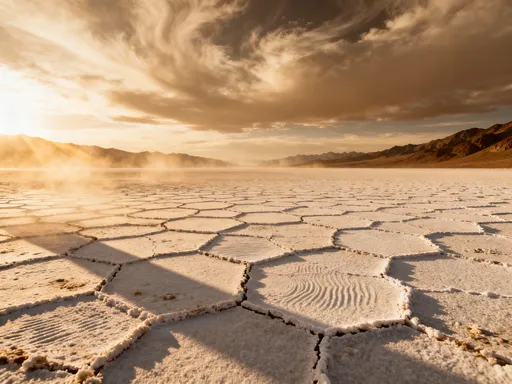
Standing at Badwater Basin is like stepping onto another planet. This vast salt flat, located 282 feet below sea level, is the lowest elevation in North America and one of the most surreal landscapes in the national park system. The ground is covered in a mosaic of hexagonal salt tiles, formed as groundwater rich in minerals rises to the surface and evaporates, leaving behind crystallized salt. These patterns stretch for miles, creating an otherworldly texture that shifts with every step and every change in light.
A short boardwalk leads from the parking area across the salt crust, allowing visitors to walk safely onto the basin without damaging the delicate surface. While it’s tempting to venture farther, staying on the boardwalk or designated paths is essential to prevent erosion and preserve the natural patterns. The boardwalk ends at a small informational kiosk that explains the geology of the area, including how the salt flats formed and why they continue to shift and crack over time.
On rare occasions after rainfall, a shallow layer of water covers parts of the basin, transforming it into a giant mirror that reflects the sky and surrounding mountains. These ephemeral lakes are fleeting—often lasting only a few days—but they create some of the most photographed moments in Death Valley. Even in dry conditions, the reflective quality of the salt can produce stunning visual effects, especially during sunrise and sunset when the light turns golden or pink.
Visiting Badwater Basin requires careful preparation, particularly in summer. Surface temperatures can exceed 150°F (65°C), making it unsafe to walk barefoot or spend extended time in direct sun. Visitors should wear sturdy footwear, carry plenty of water, and limit exposure during peak heat. There is no shade at the site, so hats and sunscreen are essential. Despite the harsh conditions, the sense of standing at the continent’s lowest point—surrounded by silence and scale—is a powerful and humbling experience that stays with visitors long after they leave.
Mesquite Flat Sand Dunes: Where the Desert Breathes
Among the most accessible and photogenic dune fields in Death Valley, Mesquite Flat offers a classic desert landscape that feels both timeless and alive. Located just off Highway 190 near Stovepipe Wells, these dunes rise up to 100 feet in places and are shaped daily by the wind. Unlike many desert dunes, Mesquite Flat is not isolated—it’s surrounded by mountains, dry lake beds, and desert vegetation, creating a dynamic interplay of textures and colors that shift with the light.
The best time to visit is during golden hour—shortly after sunrise or before sunset—when the low-angle sunlight casts long shadows across the dunes, emphasizing their curves and ridges. The warm glow enhances the golden tones of the sand, while the contrast between light and shadow adds depth and drama to photographs. Midday light tends to flatten the scene, so many photographers plan their visits around the softer, more directional light of early morning or late afternoon.
Walking on the dunes is permitted and encouraged, though it’s more challenging than it appears. The soft sand makes each step require extra effort, and there are no trails—just open terrain where visitors can explore freely. This freedom allows for solitude, even when others are present, as people naturally spread out across the landscape. It’s not uncommon to find yourself alone on a dune crest, listening to the wind and watching the patterns shift with every gust.
Early risers may spot animal tracks imprinted in the sand—evidence of nocturnal visitors like kit foxes, rodents, or snakes that emerge during cooler hours. These subtle signs of life remind us that even in this seemingly barren environment, nature thrives in quiet, resilient ways. No permits are required to visit Mesquite Flat, and the area is open year-round. However, summer visits should be limited to early morning or evening due to extreme heat. By respecting the environment and leaving no trace, visitors help preserve this fragile ecosystem for future exploration.
Artist’s Palette: Color from the Earth’s Core
One of the most vibrant destinations in Death Valley, Artist’s Palette showcases the incredible mineral diversity hidden beneath the desert surface. Located along the one-way Artist’s Drive, this scenic loop winds through a canyon of multicolored hills stained by oxidized metals like iron, manganese, and mica. The result is a living painting—slopes in shades of green, pink, gold, and purple that shift with the sunlight. What appears as a blur of color from a distance reveals intricate layering and texture up close, a testament to millions of years of volcanic activity and erosion.
The drive to Artist’s Palette is as captivating as the destination. The 9-mile route is paved but narrow, with steep drop-offs and tight curves that require cautious driving. It is not recommended for vehicles over 25 feet in length, and large RVs should avoid the road entirely. The best time to drive is late afternoon, when the setting sun illuminates the western-facing slopes, bringing out the full intensity of the colors. Morning light tends to leave the hills in shadow, reducing their visual impact.
A short, flat trail leads from the parking area to the main viewpoint, allowing visitors to get closer to the colorful formations. While the walk is only a few hundred feet, the soft, uneven ground requires sturdy footwear. The area is fragile, and stepping off designated paths can damage the delicate surface and accelerate erosion. Park signage emphasizes the importance of staying on the trail, and rangers occasionally monitor the site to ensure compliance.
The colors at Artist’s Palette are the result of hydrothermally altered volcanic deposits. Over time, different minerals oxidized at varying rates, producing the rainbow-like effect. Iron creates reds and pinks, manganese yields purple and blue tones, and mica contributes to the shimmering quality of certain slopes. While the palette is visible year-round, it appears most vivid after a light rain, when the wet rock enhances color saturation. For photographers, a polarizing filter can help reduce glare and bring out subtle hues, while a telephoto lens can isolate interesting patterns in the rock layers.
Rhyolite Ghost Town & Nearby Lookouts: History with a View
Just outside the official park boundary lies the ghost town of Rhyolite, a haunting reminder of Death Valley’s mining past. Established during a gold rush in 1905, the town once boasted a population of over 1,000, with a school, bank, railroad, and even an opera house. But by 1916, the mines were exhausted, and Rhyolite was abandoned, leaving behind crumbling buildings made of wood, metal, and even bottle walls. Today, it stands as a quiet, open-air museum of early 20th-century frontier life, where wind and time have become the only permanent residents.
While not within Death Valley National Park, Rhyolite is frequently included in visitor itineraries due to its proximity and historical significance. The site is managed by the Bureau of Land Management and is freely accessible 24 hours a day. Visitors can explore the remains of the railway depot, the concrete bank building, and the famous Bottle House, constructed from over 50,000 beer and liquor bottles. Interpretive signs provide context for the town’s rise and fall, offering a glimpse into the boom-and-bust cycle that defined much of the American West’s mining history.
What makes Rhyolite especially compelling is its setting. Perched on a hillside, the town offers panoramic views of the surrounding desert, including distant glimpses of Death Valley’s peaks and valleys. Several pullouts along the access road provide excellent vantage points for photography, particularly at sunset when the fading light bathes the ruins in warm, golden tones. The contrast between human ambition and natural endurance is palpable, making this more than just a photo stop—it’s a moment of reflection.
Many visitors combine a trip to Rhyolite with a stop at nearby viewpoints like the Goldwell Open Air Museum, located just down the road. This outdoor sculpture park features large-scale art installations, including the famous “Last Supper” figures sculpted from wire and plaster. The combination of history, art, and landscape creates a layered experience that complements the natural wonders of the park. While Rhyolite is not a natural attraction, it adds depth and context to any journey through Death Valley, reminding us that even in the harshest environments, people once dreamed of prosperity.
Final Thoughts: Chasing Light, Not Just Landmarks
Death Valley is not a destination to be rushed. Its power lies not just in the landmarks themselves, but in the way light, silence, and scale transform the experience of being there. The most memorable moments often come not from checking off viewpoints, but from pausing—watching the color shift on a dune, listening to the wind over a salt flat, or standing in awe at the edge of a vast, ancient basin. These are the moments that stay with you, long after the journey ends.
Preparation enhances the experience. Knowing when to visit, what to bring, and how to move through the landscape responsibly allows you to fully engage with the park’s beauty without compromising safety or preservation. Staying hydrated, respecting closures, and leaving no trace are not just guidelines—they are acts of stewardship that ensure Death Valley remains wild and wondrous for future generations.
Ultimately, Death Valley invites a different kind of travel—one rooted in presence rather than pace. It asks you to slow down, to look closely, and to appreciate the quiet drama of a landscape shaped by forces far greater than ourselves. Whether you come for the sunrise at Zabriskie Point, the colors of Artist’s Palette, or the stillness of Mesquite Dunes, what you’ll find is more than scenery. You’ll find a place where the Earth speaks in silence, and where awe is not just possible—it is inevitable.